Farm Tools and Machines in English for Kids
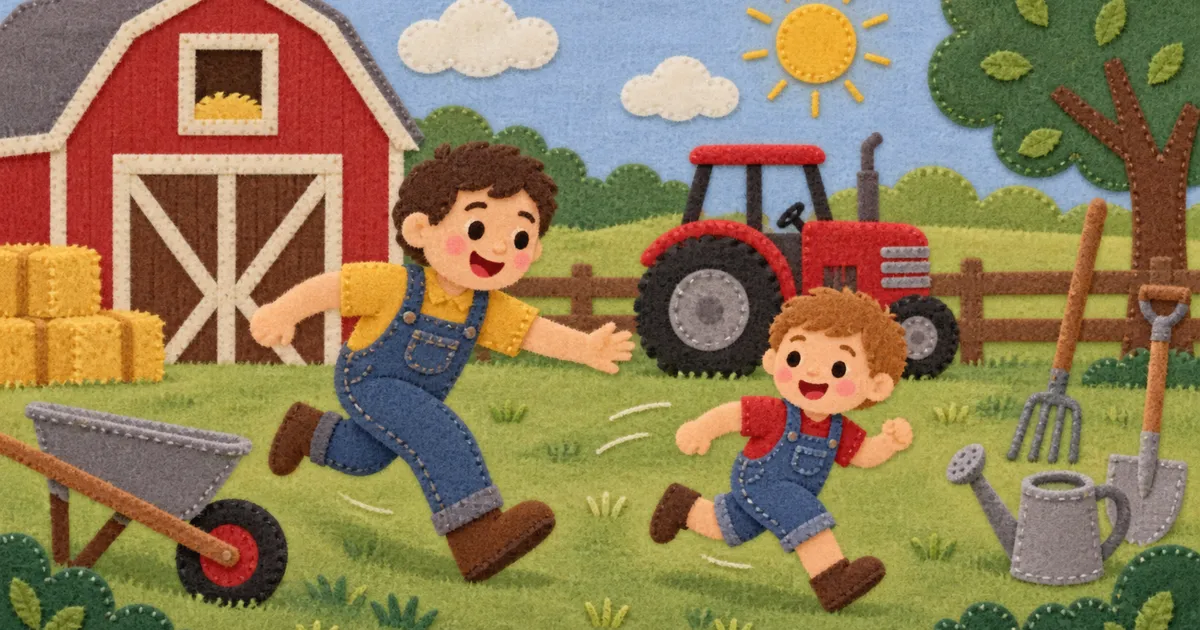
Six picture cards and one action verb per noun are enough for a first lesson on Farm Tools and Machines in English for Kids: Words and Activities. Start with tractor, rake, and bucket, paired with pull, gather, and carry. Practise for five to ten minutes: point, name, and say a full sentence, such as “The tractor pulls the trailer.” Pictures, toy models, and movements show meaning. Farm equipment can be dangerous, so teach with safe materials or supervised observation.
📥 Farm Tools and Machines Practice Pack
Vocabulary, useful sentences, playful practice, and common mix-ups
Leave your email — we'll send the PDF to your inbox.No spam — the PDF plus one short reminder. Unsubscribe anytime.
Core Farm Words and What They Mean
Describe hand-held items as tools and powered items as farm equipment. A plough is an attachment pulled by a tractor. These categories help children sort words, even when an item fits more than one group.
This Farm Tools and Machines in English for Kids: Words and Activities vocabulary set supports multiple lessons. Begin with six familiar items. Add words after your child can point to, name, and use each earlier item in a short sentence.
Put the Words into Useful Sentences
Turn Farm Tools and Machines in English for Kids: Words and Activities into speech by pairing each noun with one verb. A tractor pulls, a shovel digs, a mower cuts, and a wheelbarrow carries. Noun-verb pairs stick better than isolated labels.
- What does the tractor pull? It pulls a trailer.
- Which tool can dig? A shovel can dig.
- Where is the bucket? It is beside the barn.
- What is the combine doing? It is harvesting wheat.
- Are these rakes or hoes? They are rakes.
- Why do farms use pumps? They move water to crops.
Move from fixed models to choices. Say, “The baler makes bales.” Next, ask your child to choose between baler and mower. Later, hide the picture and request the full sentence. LearnLink tutors use this gradual shift from recognition to independent speech.
Activities Matched to Your Child’s Age
For school-age kids, keep Farm Tools and Machines in English for Kids: Words and Activities physical and brief. Place six picture cards on the floor. Name one for your child to touch, then swap roles. Add movements: dig with a shovel, push a wheelbarrow, or steer a tractor. Finish by sorting cards into tools and powered equipment.
For school-age kids, add jobs and reasons. Match each item to an action card, build sentences, or design a farm map. Ask, “Where should the irrigation pump go?” and “Which piece of equipment can collect grain?” Multilingual children can confirm meaning in their home language, then return to English.
For school-age kids, introduce comparison and problem-solving. Set a task: moving soil, cutting grass, or planting a field. Ask the learner to select equipment and explain why. Older learners can compare hand tools and powered equipment by speed, power, cost, safety, and environmental impact without specialist farming knowledge.
Practice Through Play and Daily Routines
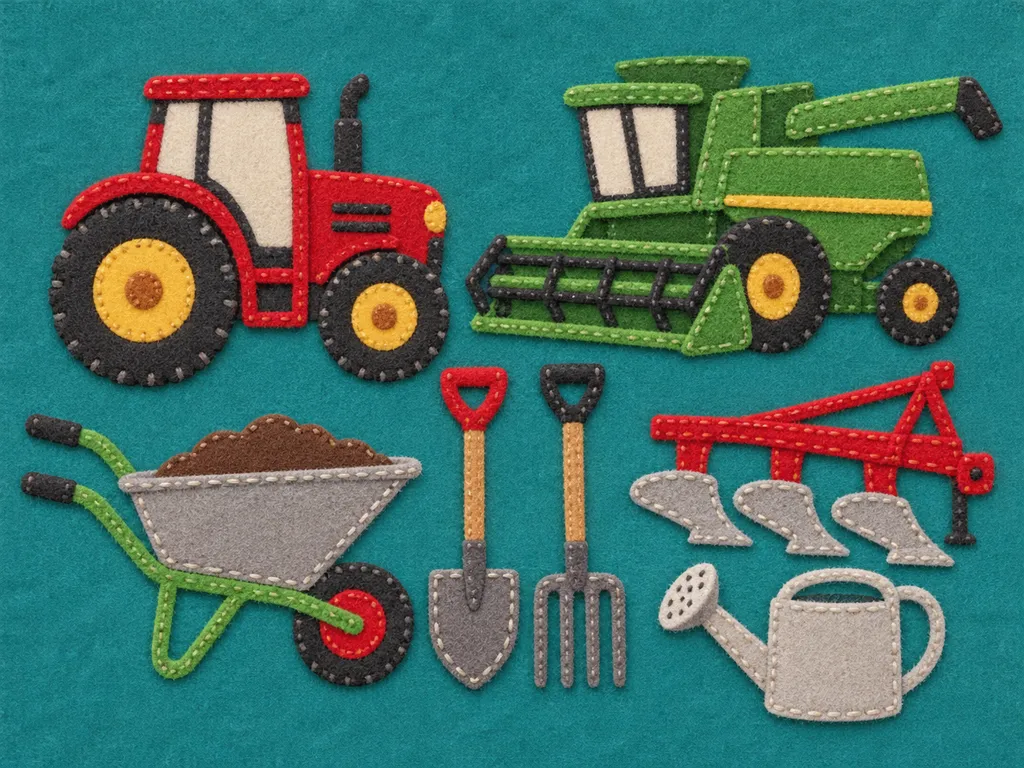
Food packets, farm books, or a supervised visit connect vocabulary with real life. Ask your child to identify equipment, name its job, and make a sentence. Never let a child touch or climb on farm equipment without a safe activity and direct adult supervision.
Farm Sorting Challenge
Write eight equipment words on separate slips. Make three labels: “cuts,” “carries,” and “moves soil.” Your child sorts each word by job, then explains one choice in a full sentence. Words may fit more than one group, creating a reason to speak.
Repeat the words in different games across a few days. Play a pointing game, describe a hidden picture, then ask your child to give directions: “Take the bucket to the barn” or “Park the tractor beside the field.” Brief changes reinforce familiar language without mechanical drills.
Common Mix-ups to Correct Early
A shovel usually lifts loose material; a spade has a flatter blade for cutting soil. Usage varies, so accept the term taught at your child’s school or used locally. Teach plough and plow as two spellings of one word, not different equipment.
Children may call every large farm vehicle a tractor. Contrast pictures by purpose: a tractor pulls, a combine harvester cuts and collects grain, and a baler presses hay or straw. In everyday speech, a combine harvester is also a combine.
Include grammar in corrections. Say a tractor but two tractors. Treat pruning shears as plural: “The shears are sharp.” Equipment is uncountable: “The farm has new equipment,” not “equipments.” For pronunciation, hoe rhymes with go, while machine carries stress on the second syllable.
- Practice naming five farm tools with children ages six to nine using picture cards.
- Sort four hand tools and four machines into labeled baskets or columns.
- Contrast rake and tractor by asking what each does and how it moves.
- Use one farm picture book to correct confusing words during a ten-minute read.
- Repeat each corrected word twice, then use it in a simple sentence.
When a word has several meanings or pronunciations, Cambridge Dictionary is a useful check before turning it into child-friendly examples.
Frequently Asked Questions
Which Farm Words Should My Child Learn First?
Start with six easy-to-picture words: tractor, shovel, rake, bucket, wheelbarrow, and mower. Pair each with one action and picture. Add two or three items after your child recognises the first set and uses its words in short sentences.
How Can We Learn Farm Vocabulary If We Do Not Live Near a Farm?
Use toy models, photographs, picture books, or short age-suitable videos. A farm visit helps but is not required. Build a paper field, place the equipment, and ask what each item does. The goal is to connect each word with its function, not handle machinery.
Should My Child Learn Both British and American Farm Terms?
Teach the form used at school or in your child’s learning materials first. Then introduce alternatives such as plough and plow. Your child need not use both forms at once, but recognising each prevents confusion in books or content from different English-speaking regions.
How Often Should We Practise These Words?
Farm Tools and Machines in English for Kids: Words and Activities works best in short, repeated sessions. Five to ten minutes on three or four days beats one long drill. Reuse words in pointing, sorting, speaking, and guessing games. Once answers become quick and accurate, add new items or longer sentences.
Check whether your child can complete three tasks without a model:
- Start with six picture cards and name each item.
- Practise one action sentence for every word.
- Try one sorting or guessing game, then ask for a full sentence.
A short one-to-one lesson can show what level and pace fit your child — book a trial English lesson.
Stay updated on our latest tips and resources by following us on Instagram LearnLink.